 Email:
What Are the Disadvantages of Brass Fittings
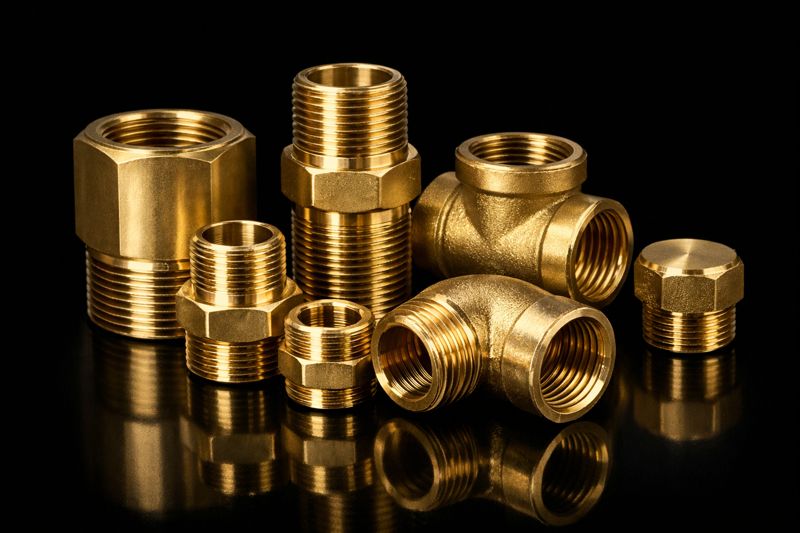
Brass fittings are widely used in plumbing, industrial, and fluid-handling applications due to their strength, corrosion resistance, and reliability. While brass offers many advantages, it is equally important for engineers, buyers, and system designers to understand its limitations. Making an informed material choice helps ensure optimal performance, safety, and cost efficiency for specific applications.
At Gajanan Brass, we believe in transparency and helping customers choose the right solution for their needs. This blog discusses the key disadvantages of brass fittings, along with important considerations when selecting them for various applications.
1. Higher Initial Cost Compared to Some Alternatives
One of the primary disadvantages of brass fittings is their higher upfront cost when compared to materials such as plastic or mild steel. Brass is a copper-based alloy, and fluctuations in copper prices can directly impact the cost of brass components.
While brass fittings offer long-term durability and reliability, budget-sensitive projects may initially find alternative materials more economical. However, it is important to evaluate total lifecycle cost rather than just initial purchase price.
2. Not Suitable for Highly Corrosive Environments
Although brass has good corrosion resistance, it is not ideal for highly corrosive or aggressive chemical environments. Certain chemicals, acidic solutions, and saltwater conditions can cause dezincification, a process where zinc leaches out of the brass alloy.
In such environments, specialized alloys or materials like stainless steel or engineered plastics may perform better than standard brass fittings.
3. Dezincification Risk in Poor-Quality Brass
Low-quality brass fittings with improper alloy composition are more susceptible to dezincification, especially in water systems with high chloride content or extreme temperatures.
This can lead to:
Reduced mechanical strength
Increased leakage risk
Shortened service life
At Gajanan Brass, high-quality raw materials and controlled manufacturing processes are used to minimize such risks, but it remains an important consideration when selecting brass fittings.
4. Limited Performance at Extremely High Temperatures
Brass fittings perform well across a wide temperature range, but they are not suitable for extremely high-temperature applications. At elevated temperatures, brass can lose strength and may deform under pressure.
For applications involving very high heat or thermal cycling, materials such as stainless steel or specialized alloys may be more appropriate.
5. Heavier Than Plastic Alternatives
Compared to plastic fittings, brass fittings are heavier. In large-scale installations or systems where weight reduction is a priority, this added weight can be a disadvantage.
Heavier fittings may also increase transportation costs and installation effort, particularly in projects requiring a high volume of components.
6. Potential Compatibility Issues with Certain Fluids
Brass fittings are not compatible with all fluids. For example, ammonia and some aggressive chemicals can react negatively with brass, leading to material degradation.
Before selecting brass fittings, it is essential to verify compatibility with the intended fluid or gas to avoid premature failure or safety issues.
7. Environmental Impact of Mining Raw Materials
While brass is recyclable, the mining and processing of copper and zinc have environmental impacts. Energy consumption and resource extraction are considerations when evaluating material sustainability.
That said, using high-quality, long-lasting brass fittings can help offset this impact by reducing frequent replacements and waste.
Conclusion
Brass fittings offer many advantages, but they are not a universal solution for every application. Higher initial cost, limitations in highly corrosive or high-temperature environments, and compatibility concerns are key disadvantages to consider.
At Gajanan Brass, we focus on manufacturing high-quality brass fittings that meet international standards and deliver reliable performance in suitable applications. By understanding both the advantages and disadvantages of brass fittings, customers can make informed decisions and select the most effective solution for their specific requirements.
Contact us for any requirement of brass components.
Our team will be happy to assist you.
Mobile: +91-99242 32871