 Email:
The Ultimate Guide to Brass Pipe Fittings: The Backbone of Industrial Fluid Systems
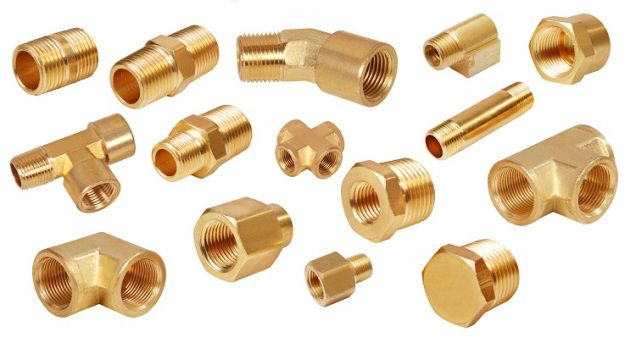
In the complex world of industrial infrastructure, the integrity of a system is only as strong as its weakest connection. Whether it is a massive chemical processing plant, a sophisticated HVAC network, or high-pressure hydraulic machinery, the choice of pipe fittings is a decision that impacts safety, efficiency, and long-term costs.
At Gajanan Brass Global, we have spent years perfecting the art and science of brass manufacturing. We know that brass isn’t just a “middle-ground” metal—it is often the superior choice for demanding industrial applications. This ultimate guide explores everything you need to know about brass pipe fittings, from metallurgical advantages to selection criteria and maintenance.
1. Why Brass? The Science of the Alloy
To understand why brass is a staple in the industrial sector, we must look at its composition. Brass is primarily an alloy of copper and zinc. By adjusting the ratios and adding trace elements like lead (for machinability) or tin (for corrosion resistance), manufacturers can create specific grades for specific tasks.
Key Material Advantages:
Corrosion Resistance: Unlike iron or steel, brass does not rust. It resists corrosion from moisture, minerals in water, and various industrial chemicals.
High Ductility and Malleability: Brass is easier to machine than stainless steel. This allows for precision threading and complex shapes that ensure a “bubble-tight” seal.
Extreme Temperature Tolerance: Brass maintains its structural integrity in temperatures ranging from sub-zero to over 400°F (approx. 200°C). It does not become brittle in the cold or soft under heat.
Low Magnetic Permeability: This makes brass fittings essential for sensitive electronic and medical equipment where magnetic interference must be avoided.
Natural Antimicrobial Properties: The high copper content helps prevent the growth of bacteria and biofilms, making it a favorite for pharmaceutical and food-grade applications.
2. Essential Types of Brass Pipe Fittings
Navigating the catalog of an industrial supplier can be daunting. Here is a breakdown of the core components manufactured at Gajanan Brass Global and their specific functions.
A. Directional Fittings
90° and 45° Elbows: Used to change the direction of flow. In industrial settings, “Long Radius” elbows are often preferred to minimize friction and pressure loss.
Tees and Crosses: These allow for the distribution of fluid or gas. A “Tee” splits one line into two, while a “Cross” connects four pipes at 90-degree angles.
B. Connecting and Extending Fittings
Couplings: These join two pipes of the same diameter.
Reducers: Essential when transitioning from a larger main line to a smaller feeder line.
Nipples: Short lengths of pipe with male threads at both ends, used to connect two other fittings.
Unions: Unlike a standard coupling, a union consists of three parts that allow the pipe to be disconnected without cutting—vital for systems requiring frequent maintenance.
C. Sealing and Ending Fittings
Caps and Plugs: Used to seal the end of a pipe run. Plugs have male threads (fit inside), while caps have female threads (fit over the outside).
Bushings: These are used to reduce a threaded opening. They are similar to reducers but focus on the thread size within a single fitting.
3. Understanding Thread Standards: The Key to Leak Prevention
One of the most common causes of system failure is “thread mismatch.” Even a slight difference in pitch or taper can lead to catastrophic leaks. At Gajanan Brass Global, we manufacture to several international standards:
NPT (National Pipe Tapered)
Predominant in North America. The threads are tapered, meaning as they are screwed together, the threads compress against each other to form a seal. Usually requires a sealant like PTFE tape.
BSP (British Standard Pipe)
Common in Europe, Asia, and Australia.
BSPP (Parallel): Requires a gasket or O-ring to seal.
BSPT (Tapered): Similar to NPT but with a different thread angle ($55^\circ$ instead of $60^\circ$).
Metric Threads
The global standard for most mechanical assemblies. These are measured in millimeters and are the go-to for automotive and precision machinery applications.
4. Industrial Applications: Where Brass Performs Best
The Oil & Gas Sector
In refineries and offshore rigs, brass is used in instrumentation lines and control systems. Its non-sparking properties are a critical safety feature in environments where flammable gases are present.
Plumbing and HVAC
In commercial buildings, brass is the gold standard for hot and cold water distribution. Its resistance to “calcification” (the buildup of minerals) ensures that flow rates remain consistent over decades of use.
Automotive and Marine
Brass fittings are used in air brake systems, fuel lines, and cooling systems. In marine environments, we use Naval Brass, which includes tin to protect against the highly corrosive nature of saltwater.
Hydraulic and Pneumatic Systems
Because brass can withstand high pressures without cracking, it is the preferred material for air compressors and hydraulic power units used in manufacturing.
5. Quality Control: The Gajanan Brass Global Standard
When you choose a manufacturer, you aren’t just buying parts; you are buying reliability. Our manufacturing process involves several layers of rigorous testing:
Material Verification: We use optical emission spectrometers to verify the chemical composition of our brass ingots.
CNC Precision: Our high-speed CNC machines ensure that every thread is cut to a tolerance of microns.
Pressure Testing: Samples from every batch are subjected to hydrostatic pressure tests to ensure they won’t burst under extreme conditions.
Finish and Coating: Depending on the client’s needs, we offer various finishes, including natural brass, nickel plating, and chrome plating for added durability and aesthetic appeal.
6. Maintenance and Longevity of Brass Fittings
While brass is incredibly durable, a “install and forget” mentality can lead to issues. To maximize the lifespan of your fittings:
Avoid Over-Tightening: Especially with tapered threads (NPT), over-tightening can “stress crack” the female fitting.
Compatible Sealants: Ensure that any thread sealant used is compatible with the fluid being transported.
Inspect for Dezincification: In certain water conditions, the zinc can leach out of the brass, leaving a weak, porous copper structure. If you see a white, powdery substance on the fitting, it may be time for a replacement.
7. How to Source High-Quality Brass Fittings Globally
In an era of global supply chains, finding a partner who understands international logistics is as important as the product itself.
What to look for in a global supplier:
Certifications: Ensure the manufacturer is ISO 9001:2015 certified.
Customization: Can they manufacture to your specific blueprints? At Gajanan Brass Global, we specialize in custom OEM parts.
Lead Times: A cheaper part isn’t cheaper if it arrives three weeks late, causing a factory shutdown.
Contact us for any requirement of brass components.
Our team will be happy to assist you.
Mobile: +91-99242 32871