 Email:
The Strength of Precision: Top Applications of Forged Brass in Modern Industries
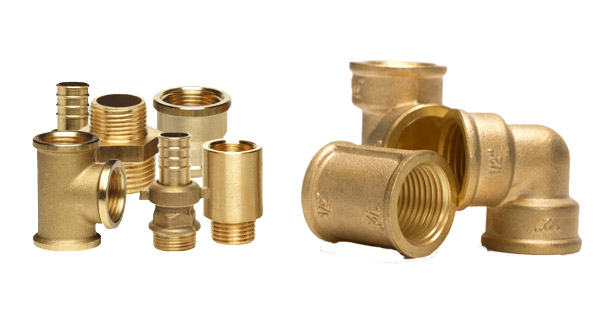
In the world of metal fabrication, few materials strike the perfect balance between beauty, durability, and machinability quite like forged brass. While many people associate brass with decorative antiques or musical instruments, the reality of modern industry is far more technical.
At Gajanan Brass Global, we’ve seen firsthand how forged brass components have become the backbone of critical infrastructure, from the plumbing in our homes to the high-pressure systems in aerospace engineering.
But why forging? Unlike casting—where molten metal is poured into a mold—forging uses extreme pressure to shape the metal while it’s in a solid (but heated) state. This process refines the grain structure of the brass, resulting in a part that is denser, stronger, and completely free of the porosity that can plague cast parts.
Here is a deep dive into the top applications of forged brass across today’s most demanding industries.
1. Plumbing, Heating, and HVAC Systems
This is perhaps the most recognizable home for forged brass. Because brass is naturally resistant to corrosion and biofouling, it is the gold standard for moving water and gases.
Valves and Fittings: Forged brass ball valves, gate valves, and check valves are used in residential and industrial plumbing because they can withstand high pressure without leaking.
Manifolds for Radiant Heating: In modern “smart homes,” forged brass manifolds distribute hot water through underfloor heating systems. Forging ensures these parts can handle constant thermal expansion and contraction for decades.
Air Conditioning Refrigeration: Brass remains stable at extreme temperatures, making it ideal for flare fittings and AC service valves.
2. The Automotive and Transportation Industry
As vehicles become more complex, the need for components that can survive harsh environments—heat, road salt, and vibration—has never been higher.
Brake System Components: Forged brass is often used in air brake systems for heavy-duty trucks. Its reliability under pressure is a literal lifesaver.
Sensor Housings: Modern cars are packed with electronics. Forged brass provides a rugged, non-magnetic housing for sensors that monitor fuel pressure and engine temperature.
Transmission Parts: Synchronizer rings made from forged brass alloys provide the necessary friction and wear resistance to ensure smooth gear shifts.
3. Electrical and Electronics Infrastructure
Brass is an alloy of copper and zinc. Because it retains much of copper’s high electrical conductivity while being significantly stronger and cheaper, it is indispensable in electrical engineering.
Heavy-Duty Connectors: In power grids and industrial machinery, forged brass connectors ensure a secure, low-resistance path for electricity.
Switchgear Components: Forged parts are used in high-voltage circuit breakers where mechanical strength and electrical integrity must coexist.
Terminals and Grounding Clamps: The forging process ensures these parts won’t crack or “creep” over time, preventing dangerous electrical arcs.
4. Oil, Gas, and Petrochemical Sectors
In environments where a single spark or a microscopic leak can lead to disaster, forged brass is a preferred material due to its non-sparking properties.
Gas Metering and Regulation: Forged brass bodies are used in natural gas regulators because they offer a “gas-tight” seal that casting simply cannot guarantee.
Explosion-Proof Fittings: In refineries, brass is used for electrical conduits and enclosures because it doesn’t create sparks if struck by a tool.
High-Pressure Hose Couplings: Forged brass couplings are used to transfer chemicals and fuel, providing a robust connection that resists chemical degradation.
5. Aerospace and Defense
When weight-to-strength ratios and absolute reliability are the primary concerns, engineers turn to specialized brass forgings.
Hydraulic Fittings: Aircraft utilize complex hydraulic systems to control flaps and landing gear. Forged brass fittings offer the high fatigue strength required to survive thousands of flight hours.
Ordnance and Munitions: Brass has been the standard for shell casings and fuse mechanisms for over a century due to its ability to expand and seal under the high pressure of a firing pin.
Naval Hardware: On ships and submarines, forged brass (specifically “Naval Brass” containing tin) is used for its exceptional resistance to saltwater corrosion.
6. Medical and Laboratory Equipment
The medical field requires materials that are easy to sterilize and safe for human contact.
Oxygen Regulators: Forged brass is the primary material for medical oxygen valves. It is “oxygen-compatible,” meaning it won’t spontaneously combust in high-pressure oxygen environments.
Surgical Tool Handles: The weight and balance of forged brass provide surgeons with better tactile feedback, and the material’s natural antimicrobial properties (thanks to the copper content) help reduce hospital-acquired infections.
Why Choose Forged Brass Over Other Methods?
| Feature | Forged Brass | Cast Brass | Plastic/Composite |
| Strength | Extremely High | Moderate | Low |
| Leak Resistance | Superior (No Porosity) | Risk of “pinholes” | High (but degrades) |
| Durability | 50+ Years | 10-20 Years | 5-10 Years |
| Machinability | Excellent | Varies | Poor (High heat risk) |
The “Green” Advantage of Forged Brass
In an era of sustainability, forged brass is a hero. It is 100% recyclable. At the end of a component’s life, it can be melted down and forged into a new part with zero loss in physical properties. This makes it an essential material for companies like Gajanan Brass Global that are committed to a circular economy.
Conclusion: The Future of Forging
As industries push toward “Industry 4.0,” the demand for high-precision, zero-defect components is skyrocketing. Whether it’s the hydrogen economy requiring specialized valves or EVs needing high-conductivity terminals, forged brass is evolving to meet the challenge.
At Gajanan Brass Global, we specialize in precision forging that meets international standards. We don’t just make parts; we provide the reliability that modern industry is built upon.
Contact us for any requirement of brass components.
Our team will be happy to assist you.
Mobile: +91-99242 32871