 Email:
The Ultimate Guide to Brass Materials: Types, Properties, and Industrial Applications
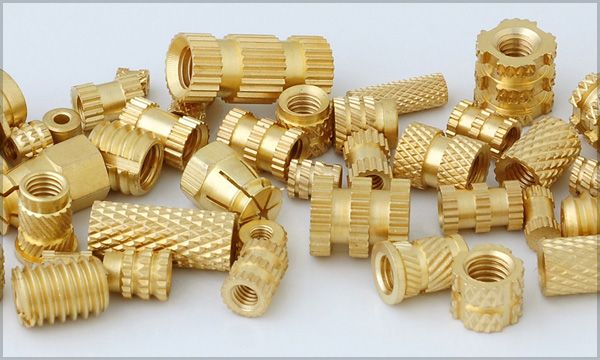
Brass has been a cornerstone of human industry for millennia. From the ancient coins of the Roman Empire to the high-precision components used in modern aerospace, this versatile alloy remains irreplaceable. For businesses and engineers, choosing the right type of brass isn’t just a technicality—it’s a decision that impacts the durability, conductivity, and cost-effectiveness of the final product.
In this comprehensive guide, we explore the diverse world of brass materials to help you identify the perfect alloy for your next project.
What isBrass? Understanding the Foundation
At its core, brass is a non-ferrous metal alloy primarily composed of Copper (Cu) and Zinc (Zn). By varying the proportions of these two elements—and introducing small amounts of “dopants” like lead, tin, or aluminum—manufacturers can create a spectrum of brass types with vastly different physical properties.
The Core Chemistry
The ratio of copper to zinc typically ranges from 55% to 95% copper.
Higher Copper Content: Results in a softer, more ductile material with a golden-red hue.
Higher Zinc Content: Increases strength and hardness but can make the alloy more brittle and susceptible to corrosion.
Categorizing Brass by Atomic Structure
Before diving into specific names, it’s important to understand how brass is categorized based on its metallurgical “phase.”
1. Alpha Brass (Cu > 65%)
Alpha brasses contain more than 65% copper. They have a homogeneous crystal structure, making them incredibly ductile at room temperature. These are the “cold-working” champions of the brass family.
Best for: Deep drawing, cold rolling, and intricate forming.
2. Alpha-Beta (Muntz) Brass (Cu 55–65%)
Also known as “Duplex brass,” these alloys contain both alpha and beta grain structures. They are harder and stronger than alpha brass but less ductile at room temperature.
Best for: Hot-working processes like forging and casting.
7 Common Types of Brass Materials and Their Uses
1. Yellow Brass (33% Zinc)
Often referred to as “70/30 Brass” or “Cartridge Brass,” this is perhaps the most common type. It offers a brilliant yellow color and excellent cold-working properties.
Applications: Musical instruments (trumpets/trombones), radiator cores, and ammunition casings.
Why choose it: High ductility and good corrosion resistance.
2. Red Brass (85% Copper)
Known for its reddish tint, red brass is valued for its high copper content which provides superior corrosion resistance, especially against “dezincification” in water systems.
Applications: Plumbing valves, underground service lines, and decorative hardware.
Why choose it: Longevity in harsh environments and aesthetic appeal.
3. Free-Cutting Brass (C36000)
This is the “gold standard” for machining. By adding a small percentage of Lead (Pb) (typically 2-3%), the material becomes easy to cut, drill, and mill without wearing down tools.
Applications: Gears, nuts, bolts, and precision screw machine parts.
Why choose it: Unmatched machinability and efficiency in mass production.
4. Naval Brass (C46400)
As the name suggests, this alloy is engineered for the sea. It contains roughly 1% Tin (Sn), which significantly increases its resistance to corrosion from salt water.
Applications: Marine hardware, propeller shafts, and decorative nautical fittings.
Why choose it: Durability in high-salinity environments.
5. Admiralty Brass
Similar to naval brass but with a higher copper content and a touch of arsenic to inhibit corrosion.
Applications: Condenser tubes and heat exchanger equipment.
6. Manganese Bronze (High-Strength Brass)
Despite the name, this is technically a brass alloy. It includes manganese, iron, and aluminum to achieve strength levels comparable to steel.
Applications: Heavy-duty gears, bearings, and hydraulic components.
7. Aluminum Brass
This alloy forms a self-healing protective layer of aluminum oxide on its surface, making it exceptionally resistant to high-velocity water erosion.
Applications: Desalination plants and marine heat exchangers.
Comparative Table: Choosing the Right Alloy
| Type of Brass | Copper % | Key Additive | Primary Benefit | Common Industry |
| Yellow Brass | 70% | Zinc | Ductility | Automotive / Music |
| Red Brass | 85% | Zinc | Corrosion Resistance | Plumbing |
| Free-Cutting | 60-63% | Lead | Machinability | Fasteners |
| Naval Brass | 60% | Tin | Saltwater Resistance | Marine |
| Manganese Brass | 58% | Manganese | High Strength | Heavy Machinery |
Factors to Consider When Selecting Brass
Choosing the right brass for your manufacturing needs involves balancing four key factors:
Machinability: If your part requires complex turning or milling, C360 (Free-cutting) is your best friend.
Corrosion Environment: Will the part be exposed to seawater? Choose Naval Brass. Will it be buried underground? Red Brass is the answer.
Conductivity: Brass is a great conductor, but the higher the copper content, the better the electrical and thermal conductivity.
Aesthetics: For architectural finishes, the “color” of the brass (ranging from deep red to pale yellow) is often the deciding factor.
Why Gajanan Brass Global?
At Gajanan Brass Global, we specialize in high-quality brass components tailored to international standards. Whether you need precision-turned parts in Free-Cutting Brass or heavy-duty industrial fittings, our manufacturing processes ensure:
Material Integrity: We use certified alloys to guarantee performance.
Precision Engineering: State-of-the-art CNC machining for tight tolerances.
Global Export Standards: Quality control that meets the demands of the US, UK, and European markets.
Contact us for any requirement of brass components.
Our team will be happy to assist you.
Mobile: +91-99242 32871