 Email:
Why is Brass Used in Plumbing? The Ultimate Choice for Reliability and Lifespan
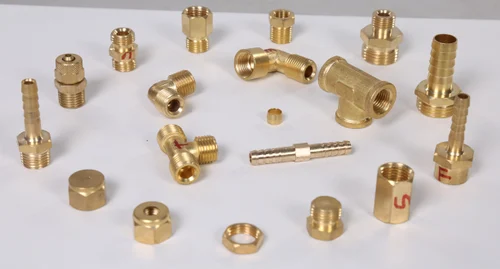
In the modern construction and industrial landscape, the veins and arteries of a building—its plumbing system—must be built to last. While various materials like PVC, PEX, and stainless steel have entered the market, Brass remains the undisputed heavyweight champion for high-quality fittings, valves, and connectors.
At Gajanan Brass Global, we understand that a plumbing system is only as strong as its weakest joint. In this blog, we explore the metallurgical and practical reasons why brass is the preferred choice for professional plumbers and engineers worldwide.
1. Unmatched Corrosion Resistance
The number one enemy of any plumbing system is corrosion. Because plumbing components are constantly exposed to water, oxygen, and varying pH levels, inferior metals like iron or untreated steel eventually succumb to rust.
The Brass Advantage:
Brass is a non-ferrous alloy (containing no iron), meaning it cannot rust. When exposed to water, brass develops a protective “patina” or oxide layer that shields the underlying metal from further degradation.
Hard Water Performance: In regions with high mineral content (hard water), brass resists the aggressive scaling and pitting that can cause leaks in other materials.
Chemical Stability: It remains stable even when exposed to the chlorine and fluorides commonly found in municipal water supplies.
2. Exceptional High-Temperature Tolerance
Plumbing isn’t just about cold water; it involves steam, boiling water for sanitation, and high-pressure heating systems.
The Brass Advantage:
Unlike plastic pipes (PVC or PEX) which can soften, warp, or become brittle when exposed to extreme heat, brass maintains its structural integrity.
Fire Resistance: Brass is naturally fire-resistant. In the unfortunate event of a building fire, brass fittings are often the only components that remain intact, preventing the plumbing system from feeding the fire or collapsing.
Hot Water Lines: Its high thermal conductivity and expansion coefficient make it the ideal material for hot water distribution, ensuring joints don’t loosen as they heat up and cool down.
3. Superior Malleability and Machinability
From a manufacturing perspective, brass is a “dream metal.” Because it is more malleable than steel or iron, it can be shaped into complex, high-precision components without cracking.
The Brass Advantage:
For Gajanan Brass Global, this malleability allows us to produce:
Deeply Threaded Fittings: Ensuring a leak-proof, “metal-to-metal” seal that is easier for plumbers to tighten.
Complex Geometries: Creating intricate Tees, Elbows, and Manifolds that optimize water flow and reduce turbulence.
Custom Designs: Tailoring components to specific industrial blueprints with micron-level accuracy.
4. Natural Antimicrobial Properties
In an era where hygiene is paramount, the material of your pipes matters. Copper—the primary ingredient in brass—is naturally antimicrobial.
The Brass Advantage:
Scientific studies have shown that copper-based alloys like brass can kill harmful bacteria, viruses, and fungi on contact. This “Oligodynamic effect” helps:
Inhibit Biofilm Growth: Preventing the slimy buildup of bacteria inside valves and taps.
Ensure Potable Water Safety: Adding an extra layer of protection to the water we drink and wash with, particularly in hospitals and food processing facilities.
5. Longevity and Total Cost of Ownership
While the initial cost of brass fittings might be higher than plastic alternatives, the long-term value is significantly greater.
The Economic Reality:
Lifespan: A well-installed brass fitting can easily last 50 to 70 years, often outliving the building itself.
Zero Maintenance: Because they don’t rust or become brittle, brass components require almost no maintenance once installed.
High Resale Value: Brass is 100% recyclable. At the end of its life, it can be sold for a high scrap value, making it a circular and sustainable choice.
Comparative Table: Plumbing Materials at a Glance
| Feature | Brass | PVC / Plastic | Stainless Steel |
| Rust Proof? | Yes | Yes | Yes (mostly) |
| Heat Tolerance | Excellent ($400$°F+) | Poor (warps) | Excellent |
| Durability | Very High | Low (can crack) | High |
| Ease of Machining | Excellent | N/A (Molded) | Difficult |
| Antimicrobial? | Yes | No | No |
6. Compatibility with Other Materials
Modern plumbing often involves a “mix and match” of materials. You might have PEX tubing connected to a brass manifold, or copper pipes leading into a brass valve.
The Brass Advantage:
Brass acts as an excellent “bridge” material. It is less likely to cause galvanic corrosion when joined with copper or stainless steel compared to joining steel with copper. This versatility makes brass the go-to material for adapters, unions, and transition fittings.
Why Source Your Brass Plumbing Parts from Gajanan Brass Global?
As an industry leader, Gajanan Brass Global provides the global market with premium brass plumbing components that adhere to international quality certifications (ISO, ASTM, SAE). When you choose our products, you are getting:
Lead-Free Options: Ensuring compliance with modern health and safety regulations for drinking water.
Forged Strength: Our forged brass components offer $37\%$ higher strength than standard castings.
Global Export Excellence: We understand the technical requirements of the US, European, and Middle Eastern plumbing codes.
Contact us for any requirement of brass components.
Our team will be happy to assist you.
Mobile: +91-99242 32871