 Email:
Benefits of Using High-Quality Brass Sensor
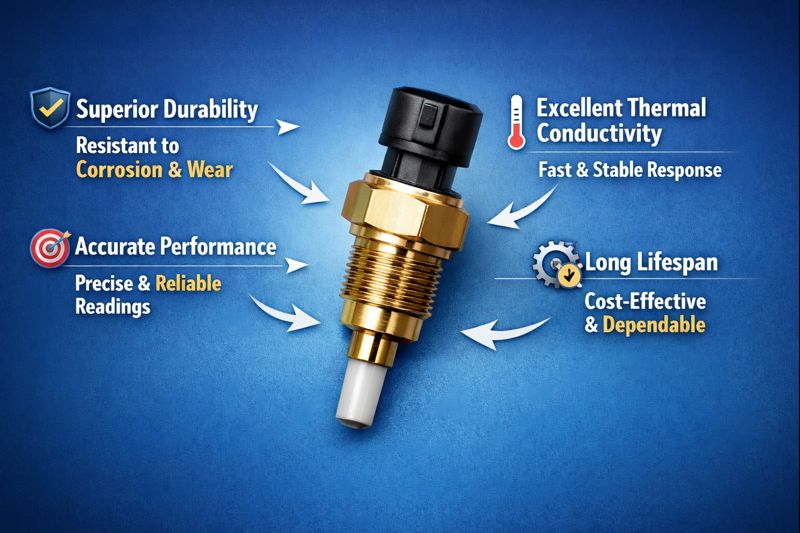
In modern industrial and commercial applications, sensors play a critical role in ensuring accuracy, safety, and efficiency. Among the many materials used in sensor manufacturing, high-quality brass stands out as a reliable and cost-effective choice. From pressure and temperature sensors to flow and proximity sensors, brass components are widely trusted across industries. This blog explores the key benefits of using high-quality brass sensors and why they remain a preferred option for engineers and manufacturers.
1. Excellent Corrosion Resistance
One of the most significant advantages of brass is its natural resistance to corrosion. Brass, an alloy primarily made of copper and zinc, performs exceptionally well in environments exposed to moisture, water, oils, and mild chemicals.
High-quality brass sensors are especially suitable for:
Plumbing and HVAC systems
Automotive and marine applications
Industrial fluid and gas monitoring
By resisting rust and degradation, brass sensors maintain performance and accuracy over long periods, reducing the risk of system failure.
2. Superior Durability and Strength
High-quality brass offers an ideal balance between strength and flexibility. It is strong enough to withstand mechanical stress, vibration, and pressure, yet not so brittle that it cracks under load.
This durability makes brass sensors reliable in demanding conditions such as:
High-pressure environments
Continuous operation cycles
Outdoor and industrial installations
As a result, equipment downtime and replacement costs are significantly reduced.
High-quality brass sensors are especially suitable for:
Plumbing and HVAC systems
Automotive and marine applications
Industrial fluid and gas monitoring
By resisting rust and degradation, brass sensors maintain performance and accuracy over long periods, reducing the risk of system failure.
3. Excellent Thermal and Electrical Conductivity
Brass has good thermal conductivity, which is crucial for temperature-sensitive sensor applications. It allows heat to transfer efficiently, helping sensors deliver faster and more accurate readings.
Additionally, brass provides reliable electrical conductivity, making it suitable for sensors that require stable signal transmission. This combination ensures consistent performance even under fluctuating temperature conditions.
4. High Precision and Machinability
One of the reasons manufacturers prefer high-quality brass is its excellent machinability. Brass can be precisely machined into complex shapes and tight tolerances without compromising structural integrity.
This results in:
Highly accurate sensor components
Smooth surface finishes
Better sealing and fitting with other system parts
Precision machining directly contributes to improved sensor accuracy and repeatability.
5. Cost-Effective Without Compromising Quality
Compared to stainless steel or specialized alloys, brass offers a cost-effective solution while still delivering excellent performance. High-quality brass sensors provide a strong return on investment due to their long service life, minimal maintenance requirements, and dependable operation.
For manufacturers and end users alike, this balance between performance and affordability is a major advantage.
6. Compatibility with a Wide Range of Media
Brass sensors are compatible with a broad range of liquids and gases, including:
Water and steam
Air and non-corrosive gases
Oils and fuels
This versatility makes them suitable for multiple industries, from manufacturing and automation to energy and transportation.
7. Resistance to Biofouling and Bacterial Growth
Brass contains copper, which has natural antimicrobial properties. This helps inhibit bacterial growth and biofouling, making brass sensors an excellent choice for:
Water systems
Food and beverage processing
Medical and sanitation-related applications
This added hygiene benefit enhances safety and compliance with industry standards.
8. Environmentally Friendly and Recyclable
Sustainability is becoming increasingly important in industrial design. Brass is 100% recyclable without losing its properties, making high-quality brass sensors an environmentally responsible choice.
Using recyclable materials helps reduce waste, conserve resources, and support green manufacturing practices.
Conclusion
Sustainability is becoming increasingly important in industrial design. Brass is 100% recyclable without losing its properties, making high-quality brass sensors an environmentally responsible choice.
Using recyclable materials helps reduce waste, conserve resources, and support green manufacturing practices.
Contact us for any requirement of brass components.
Our team will be happy to assist you.
Mobile: +91-99242 32871