 Email:
The Brass City of India: A Deep Dive into Gujarat's Manufacturing Powerhouse
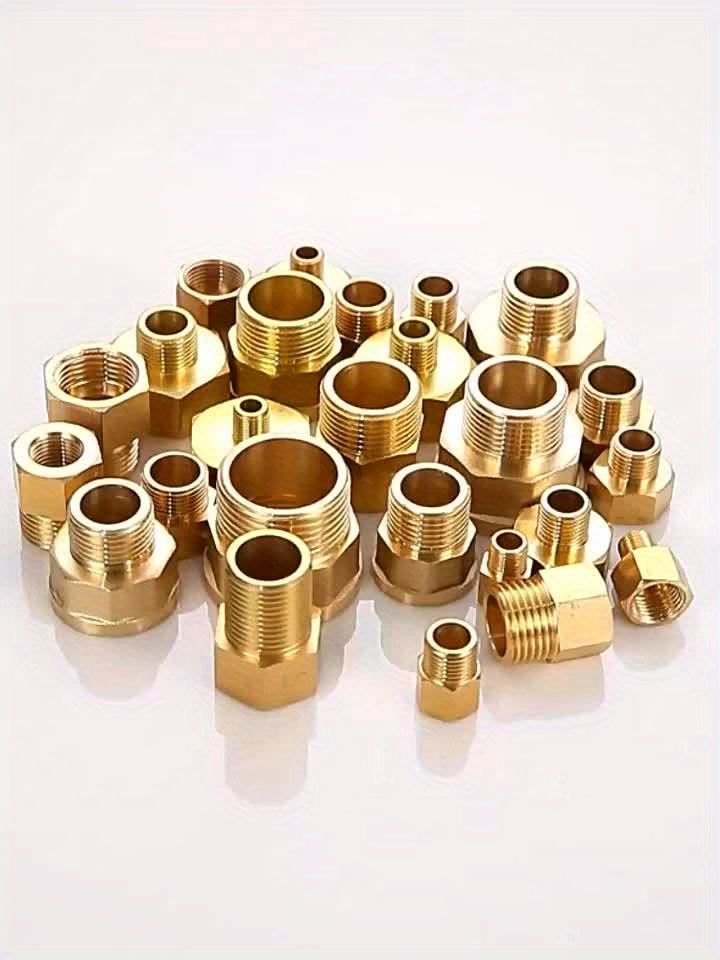
Gujarat—a state synonymous with industrial prowess, entrepreneurial spirit, and global trade—is home to one of India’s most specialized and dynamic manufacturing sectors: the brass industry.
For decades, the name Gujarat has been intrinsically linked to the production of high-quality, precision-engineered brass components. However, to discuss the brass industry of Gujarat is specifically to discuss one city: Jamnagar.
Jamnagar, often proudly dubbed the “Brass City of India,” is the undisputed epicenter of this industry. It is a sprawling industrial cluster where traditional craftsmanship seamlessly merges with cutting-edge manufacturing technology. This tiny corner of Western India accounts for a staggering majority of the country’s total brass parts production and exports, making it a critical supplier for OEMs (Original Equipment Manufacturers) across North America, Europe, the Middle East, and Asia.
This post will explore the roots of this golden industry, analyze its global significance, detail the vast range of products manufactured, and provide crucial guidance for businesses looking to source the finest brass components from Gujarat.
The Rise of Jamnagar: A Historical and Economic Powerhouse
The story of the brass industry in Gujarat is a fascinating tale of organic growth and specialization. It didn’t start with large factories, but with thousands of small, family-owned workshops that gradually developed an unmatched expertise in handling the alloy.
From Workshop to World Hub
The industry took firm root in Jamnagar in the mid-20th century. Its proximity to major ports like Kandla Port (Deendayal Port) offered a massive logistical advantage, enabling cost-effective import of raw materials (copper and zinc) and efficient export of finished goods.
Today, the Jamnagar cluster comprises anywhere from 3,000 to over 5,000 manufacturing units. This dense ecosystem includes everything required for the complete brass lifecycle:
Foundries and Extrusion Units: Producing brass rods, ingots, and bars.
Precision Machining Shops: Utilizing advanced CNC and VMC machinery.
Electroplating and Finishing Units: Specializing in nickel, chrome, and tin plating.
Ancillary Industries: Tool-making, die-casting, and material testing labs.
This industrial density creates powerful economies of scale, allowing manufacturers to access raw materials and specialized services at competitive prices, ultimately benefiting the global consumer with high-quality, yet affordable, components. The industry provides direct and indirect employment to hundreds of thousands of people, serving as a pillar of the regional economy.
Precision and Versatility: Key Products and Applications
The range of brass products manufactured in Gujarat is astonishingly diverse. Manufacturers here are not just making simple fixtures; they are producing highly complex, tight-tolerance parts essential for critical industrial applications.
The industry thrives on its ability to produce components that meet various global standards, including DIN, JIS, BS, ISO, and ASTM.
Core Product Categories
The expertise of Gujarat’s brass manufacturers spans several critical industrial verticals:
1. Precision Fasteners and Inserts
This is arguably the most recognizable specialty of Jamnagar. Manufacturers produce a massive volume of specialized brass fasteners, including:
Brass Inserts: Used extensively in plastic molding (e.g., in automotive dashboards and electronic casings) for high strength and repeated assembly.
Brass Anchors: Used in construction and electrical fitting.
Precision Screws, Nuts, and Bolts: Custom-made for specific machinery and applications requiring non-magnetic, corrosion-resistant properties.
2. Electrical and Electronic Components
Brass is ideal for electrical applications due to its excellent conductivity and corrosion resistance. Manufacturers produce:
Brass Electrical Terminals and Connectors: Critical components for switchgear, junction boxes, and distribution boards.
Wiring Accessories: Earth bars, neutral links, and various connector blocks.
Fuse Links and Holders: High-precision components essential for circuit protection.
3. Plumbing, Fluid Control, and Sanitary Fittings
From the high-pressure needs of industrial fluid lines to residential tap fixtures, brass is the metal of choice.
Pipe Fittings: Compression fittings, elbows, reducers, and T-joints used in water, gas, and oil systems.
Valves: Ball valves, check valves, and specialty regulators.
Nozzles and Adapters: Custom parts for HVAC and cooling systems.
4. Automotive Components
Brass components are integral to a vehicle’s electrical and fluid systems, providing reliability where temperature and corrosion resistance are key.
Sensor Housings
Brake Line Fittings
Custom Bushings and Studs
The Competitive Edge: Why Source from Gujarat?
For international buyers and businesses looking for a reliable supply chain, choosing a brass manufacturer from Gujarat offers four distinct competitive advantages:
1. Advanced Manufacturing Technology
The perception that Indian manufacturing relies solely on manual labor is outdated, especially in Gujarat’s specialized clusters. Modern brass units heavily invest in advanced machinery:
CNC (Computer Numerical Control) Machines: Used for rapid, high-volume production of complex parts with extremely tight tolerances (down to $\pm 0.005$ mm).
VMC (Vertical Machining Centers): Essential for intricate milling, drilling, and tapping operations.
Optical Comparators and CMMs (Coordinate Measuring Machines): Utilized for stringent quality checks and precise measurement.
2. Customization and Engineering Expertise
Gujarat’s manufacturers excel at Bespoke Manufacturing. They routinely work with global OEMs to reverse-engineer parts or manufacture new components based purely on technical drawings, CAD files, or physical samples. This flexibility is a significant advantage over rigid, large-scale standardized production facilities elsewhere.
3. Stringent Quality Control and Compliance
Due to their global customer base, leading Gujarat manufacturers adhere to strict international quality benchmarks. Buyers should look for companies with:
ISO 9001:2015 Certification: Demonstrating a commitment to quality management systems.
RoHS and REACH Compliance: Ensuring products are free from hazardous substances, mandatory for exports to Europe.
Material Certification: Providing documented evidence of the brass grade and alloy composition (e.g., $CuZn39Pb3$ or $CW614N$).
4. Supply Chain Resilience and Scale
The sheer volume of manufacturers in Jamnagar ensures supply chain resilience. If one unit faces a temporary challenge, the entire ecosystem can pivot. Furthermore, the capacity for large, sustained, high-volume contracts is immense, making Gujarat an ideal long-term sourcing partner.
Actionable Advice: How to Choose the Right Manufacturer
Choosing a reliable partner in such a vast cluster requires due diligence. Follow these steps to secure the best fit for your needs:
Define Your Needs: Be precise about the required brass alloy, dimensional tolerances, and surface finish (e.g., plating type).
Verify Technology: Request documentation or videos showing their manufacturing floor, specifically confirming the use of CNC/VMC technology for your parts.
Check Certifications: Insist on current ISO and relevant product certifications. A manufacturer who invests in these systems is investing in your quality.
Evaluate Export Experience: Choose manufacturers who have a proven track record of exporting to your specific region, as they will be familiar with the necessary logistics, packaging, and regulatory documentation (e.g., Bill of Lading, Certificate of Origin).
Discuss Prototypes: Start with a small prototype order to evaluate their precision, communication, and ability to meet deadlines before committing to a bulk contract.
Contact us for any requirement of brass components.
Our team will be happy to assist you.
Mobile: +91-99242 32871