 Email:
The Global Citadel of Brass: Why the World Sources from the Jamnagar, Gujarat Industry
In the complex tapestry of global supply chains, a few locations stand out as undisputed centers of manufacturing excellence. For the brass industry, that location is unequivocally Jamnagar, Gujarat.
Famously known as the “Brass City of India” (or even the “Brass City of the World”), Jamnagar is not just a city—it is the world’s largest and most comprehensive cluster for brass production. It is home to thousands of manufacturing units, large and small, that collectively contribute up to 80% of India’s total brass exports, servicing industries across Europe, North America, the Middle East, and Asia.
For OEMs, distributors, and procurement specialists, understanding and engaging with the Brass Industry in Jamnagar, Gujarat, is the key to unlocking competitive pricing, guaranteed precision, and unparalleled supply chain resilience.
This article delves into the technological, economic, and logistical advantages that have solidified Jamnagar’s reputation as the ultimate sourcing destination for high-quality brass components.
1. The Power of the Cluster: Unmatched Scale and Efficiency
The success of the Jamnagar brass industry is rooted in its unique, cluster-based ecosystem, which has evolved over the past four decades.
A. A Complete Vertically Integrated Supply Chain
The industry operates like a finely tuned, self-sustaining machine. Within the industrial estates of Shankar Tekari and GIDC, every stage of brass production is concentrated:
Raw Material Sourcing: The cluster efficiently imports a vast amount of brass scrap (primarily from the USA and Europe), which is recycled and processed. This commitment to recycling positions the industry as a leader in the circular economy.
Foundries and Extrusion Units: Dedicated units melt, alloy, and transform scrap into ingots, billets, and brass rods, which are the raw material for machining.
Specialized Processing: Thousands of units focus solely on CNC machining, electroplating (nickel, chrome, tin), polishing, and tool-and-die making. This specialization ensures every step is performed by an expert, maximizing efficiency and quality.
This dense network reduces internal logistics costs, minimizes lead times, and allows manufacturers to respond with unprecedented speed to customized and urgent orders.
B. The Skilled Workforce Legacy
Jamnagar’s mastery of brass is an inherited craft. Generations of artisans and machinists have refined their skills, successfully transitioning from traditional metalwork to operating sophisticated CNC and VMC machines. This blend of traditional craftsmanship and modern engineering expertise is difficult to replicate, ensuring meticulous attention to detail even on high-volume, automated production lines.
2. Precision Engineering: Technology Driving Quality
The modern Brass Industry in Jamnagar, Gujarat, is defined by its embrace of advanced manufacturing technology to meet stringent global standards.
CNC and VMC Automation: Manufacturers have continuously invested in state-of-the-art Computer Numerical Control (CNC) and Vertical Machining Centers (VMC). These machines allow for production consistency with tolerances often maintained at $\pm 0.01$ mm or less, essential for zero-defect parts in sectors like automotive and electronics.
Material Science Compliance: Jamnagar manufacturers are adept at handling a wide array of specialized brass alloys required for international compliance, including:
DZR (De-zincification Resistant) Brass: For plumbing in corrosive water environments.
Lead-Free Brass ($\text{C}69300$): Mandatory for components in contact with potable water, adhering to standards like RoHS and REACH.
Prototyping and Customization: The technological infrastructure enables rapid prototyping and full OEM customization, allowing buyers to move quickly from a CAD file or 3D model to a high-volume production run.
3. Logistical Supremacy: Connecting the World
The geographical location of Jamnagar in Gujarat provides a significant, unmatchable logistical advantage for global trade.
Proximity to Ports: Jamnagar is strategically located near two of India’s largest and most efficient ports: Kandla (Deendayal Port) and Mundra. This short inland travel distance minimizes domestic freight costs and transit times, directly translating into more competitive final pricing for international buyers.
Export-Ready Infrastructure: The entire industrial setup is geared towards export. Manufacturers possess decades of experience in navigating complex international shipping documentation, customs clearance, and specialized packaging (such as tamper-proof or retail blister packing) required by destination markets.
4. Products: The Breadth of the Brass Industry Output
The components flowing out of the Brass Industry in Jamnagar are the essential, high-performance parts that sustain modern infrastructure globally:
Electrical & Electronic: Brass terminals, neutral links, cable glands, switchgear accessories.
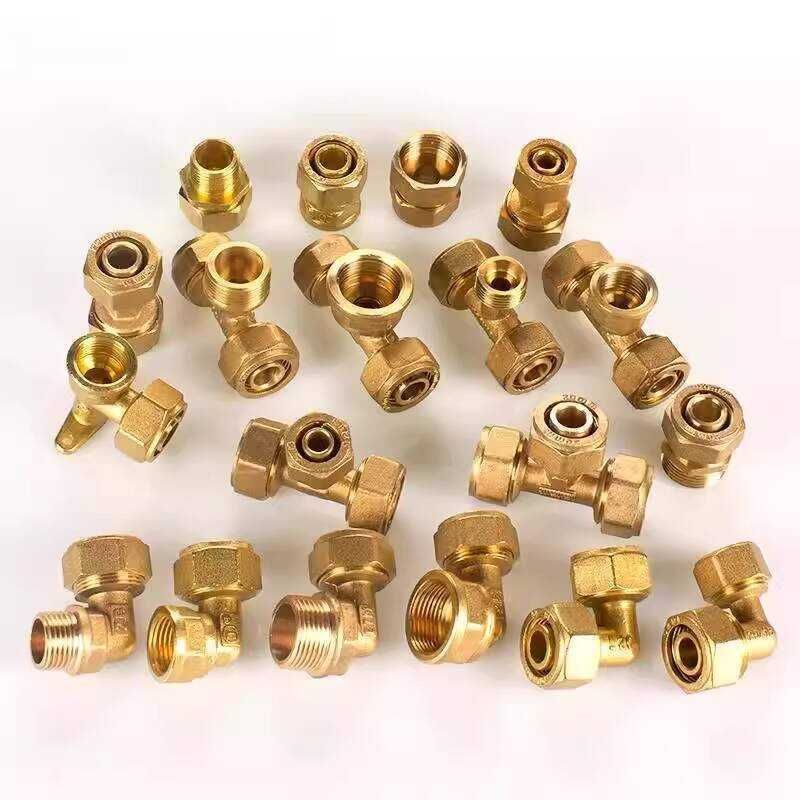
Plumbing & Fittings: Compression fittings, PEX fittings, valve inserts, hose connectors.
Automotive: Sensor bodies, brake parts, specialized fittings for CNG/LPG systems.
Hardware & Fasteners: Precision-threaded inserts for plastic molding, bolts, anchors, and specialized architectural hardware.
Conclusion: Secure Your Supply Chain in the Brass City
The Brass Industry in Jamnagar, Gujarat, is more than a manufacturing location; it is a global trade assurance. It offers a unique value proposition built on:
Cost Efficiency derived from its clustered, high-volume production model.
Guaranteed Quality enforced by ISO certification and advanced CNC technology.
Logistical Reliability secured by prime port access and decades of export expertise.
By partnering with a manufacturer from this world-renowned hub, you gain not only high-quality components but also a strategic edge that ensures stability, compliance, and excellence in your international supply chain.
Contact us for any requirement of brass components.
Our team will be happy to assist you.
Mobile: +91-99242 32871