 Email:
The Essential Connection: Why Choose a Specialized Brass Pipe Fittings Manufacturer
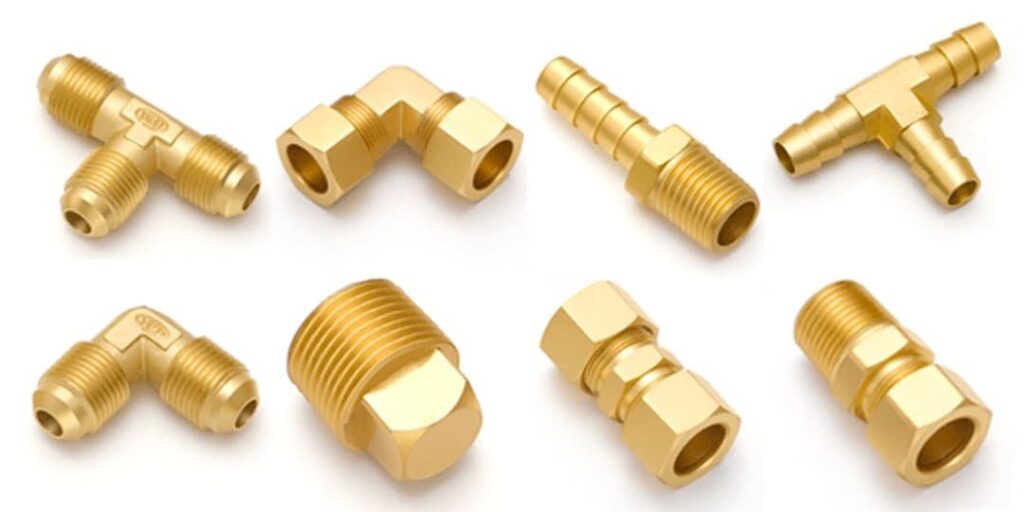
In any system involving the transport of fluids or gases—be it a residential heating unit, an industrial hydraulic line, or a complex automotive braking system—the integrity of the connection is everything. Failure is not an option. This is why brass pipe fittings remain the gold standard.
Brass is unparalleled in its ability to resist corrosion, withstand high pressure, and offer superior machinability for creating perfectly sealed connections. Choosing the right Brass Pipe Fittings Manufacturer is the single most critical decision in securing the reliability and longevity of your fluid systems.
This guide is designed for engineers, wholesalers, and procurement specialists in the plumbing, HVAC, and industrial sectors. We will detail the technical requirements, manufacturing standards, and compliance factors that differentiate a premium brass pipe fittings manufacturer in today’s global market.
1. Technical Demands: Engineered for Zero Leakage
A pipe fitting’s primary job is to create a secure, leak-proof junction, often under significant pressure and varying temperatures. This requires technical mastery that goes beyond simple shaping.
A. Mastering Thread and Seal Integrity
The most critical feature of any fitting is its thread. Flawless thread quality is achieved through specialized processes:
CNC Precision: Utilizing CNC (Computer Numerical Control) machining ensures repeatable thread dimensions (NPT, BSPT, Metric, etc.) and accurate pitch, minimizing the risk of cross-threading and guaranteeing a tight seal.
Gauging: Every production batch must pass rigorous testing with calibrated “Go/No-Go” thread gauges to ensure perfect interchangeability and compliance with international standards.
B. The Power of Forging
For high-pressure and high-stress fittings (like those in gas or industrial lines), manufacturing often involves hot forging rather than machining from bar stock. Forging:
Increases Strength: It refines the metal’s grain structure, eliminating internal porosity and making the fitting highly resistant to cracking and bursting under pressure.
Enhances Corrosion Resistance: It is often preferred for fittings designed for aggressive environments.
2. Product Versatility: Manufacturing the Full Range
A specialized manufacturer must offer a comprehensive portfolio that meets the diverse needs of fluid control systems worldwide:
| Fitting Category | Description and Applications | Key Design Requirement |
| Compression Fittings | Used for joining thin-walled piping (copper, plastic) without soldering, common in plumbing and refrigeration. | Perfect dimensional tolerance on the ferrule/olive for secure compression seal. |
| Flare Fittings | Used in high-pressure applications (e.g., fuel, hydraulic lines) where a robust mechanical seal is vital. | Smooth, exact 45° or 37° flare angle to prevent leakage at the tubing connection point. |
| PEX Fittings | Specialized inserts and connectors for cross-linked polyethylene tubing, a staple in modern residential and commercial plumbing. | Compatibility with PEX crimping tools and resistance to dezincification (DZR brass). |
| Pipe Adapters/Couplings | Threaded unions, elbows, tees, and reducers for changing direction or pipe size in rigid systems. | Uniform wall thickness and high tensile strength to handle torque during installation. |
3. Compliance and Material Assurance: The Non-Negotiables
In today’s global market, adherence to strict material and safety compliance is mandatory. A responsible Brass Pipe Fittings Manufacturer prioritizes this:
Lead-Free Compliance: For all fittings used in contact with potable water (drinking water), the use of certified Lead-Free Brass (e.g., $\text{C}69300$ or similar) is critical for markets like the US (Safe Drinking Water Act) and Europe.
DZR (De-zincification Resistant) Brass: Essential for fittings used in areas with aggressive or high-chloride water, which prevents corrosion and component failure.
Certification: Providing documented evidence that fittings comply with standards like NSF/ANSI 61 (for drinking water), UL, or relevant local plumbing codes.
RoHS and REACH: Ensuring compliance for fittings integrated into electrical or electronic systems (e.g., HVAC units) that are destined for European markets.
4. Quality Control: Beyond the Visual Inspection
Quality assurance for pipe fittings is a multi-stage process involving specialized testing:
Material Analysis: Verification of the raw brass alloy composition using X-ray fluorescence (XRF) to ensure the correct percentages of copper, zinc, and lead (or lack thereof).
Pressure Testing: Samples from every batch are subjected to high-pressure testing (hydrostatic or pneumatic) to verify the integrity of the fitting under operational and maximum stress conditions.
Dimensional Metrology: Advanced measuring instruments, including Optical Comparators and CMMs, are used to check critical dimensions, thread profiles, and angle accuracy.
Traceability: Implementation of ISO 9001:2015 systems allows for tracking every component back to its specific production batch and raw material source, essential for risk management.
Conclusion: Securing Durability and Trust
The choice of a Brass Pipe Fittings Manufacturer is a choice for durability, safety, and compliance. By partnering with a specialized factory that invests in CNC technology, hot forging capabilities, and stringent material verification, you ensure a supply chain free of leakage risks and regulatory hurdles.
Contact us for any requirement of brass components.
Our team will be happy to assist you.
Mobile: +91-99242 32871