 Email:
The Ultimate Guide to Industrial Brass Fittings: Quality, Applications, and Selection
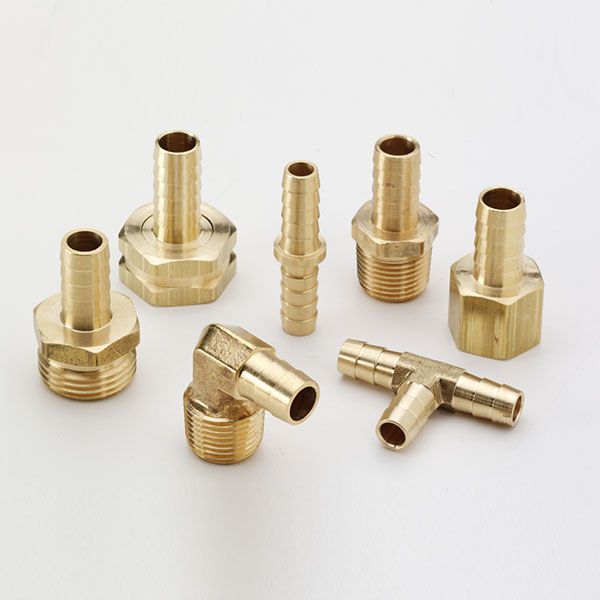
In the high-stakes world of industrial fluid and gas management, the smallest components often carry the heaviest responsibilities. Whether it is a massive desalination plant, a high-pressure hydraulic system, or a precision laboratory setup, the integrity of the entire system relies on the reliability of its connections.
At Gajanan Brass Global, we understand that “good enough” isn’t an option when it comes to industrial fittings. This comprehensive guide explores why brass remains the gold standard for industrial fittings, the specific types of parts available, and how to choose the right components for your specific needs.
Why Brass? The Science Behind the Alloy
Brass is an alloy primarily composed of copper and zinc. By adjusting the proportions of these two metals, manufacturers can create various grades of brass tailored for specific industrial environments.
Key Advantages of Brass in Industrial Settings:
Exceptional Corrosion Resistance: Unlike steel, brass does not rust. It is highly resistant to corrosion from water, heat, and various chemicals, making it ideal for long-term outdoor or underground use.
Superior Machinability: Brass is one of the most “workable” metals. This allows for incredibly tight tolerances and precision threading, ensuring leak-proof seals in critical applications.
High Temperature Tolerance: Brass maintains its structural integrity and conductivity even at high temperatures, which is vital for boiler systems and automotive engines.
Antibacterial Properties: The copper content in brass gives it natural antimicrobial properties, which is why it is preferred in hospitals and food processing units.
Essential Brass Fitting Parts for Industrial Use
To build an efficient system, you need to understand the function of each specific fitting. Here is a breakdown of the core brass components we specialize in at Gajanan Brass Global:
1. Adapters and Connectors
Adapters are used to connect two pipes or tubes of different sizes or thread types.
Male Adapters: Feature external threads.
Female Adapters: Feature internal threads.
Hex Nipples: Used to connect two female-threaded pipes or fittings.
2. Elbows (45° and 90°)
Industrial layouts are rarely straight lines. Elbows allow for changes in direction without causing significant pressure drops or turbulence within the flow.
3. Tees and Crosses
These are “multi-port” fittings. A Tee allows for a 90-degree branch off a main line, while a Cross provides four-way connectivity. These are essential in complex distribution manifolds.
4. Couplings and Unions
While both join two pipes, they serve different purposes:
Couplings: Designed for permanent or semi-permanent connections.
Unions: Feature a three-piece design that allows the pipes to be disconnected easily for maintenance or repairs without having to rotate the pipes themselves.
5. Compression Fittings
Commonly used in gas and liquid systems where soldering is not an option. These consist of a body, a nut, and a ferrule (sleeve). As the nut is tightened, the ferrule is compressed against the tube, creating a watertight seal.
Understanding Thread Types: The Language of Fittings
One of the biggest challenges in industrial procurement is ensuring thread compatibility. At Gajanan Brass Global, we manufacture fittings to meet international standards, including:
| Thread Type | Full Name | Common Use |
| NPT | National Pipe Tapered | Standard in the USA and Canada for pressure-tight seals. |
| BSPP | British Standard Pipe Parallel | Common in Europe and Asia; requires a gasket or O-ring for sealing. |
| BSPT | British Standard Pipe Tapered | Used extensively in plumbing and heating systems globally. |
| Metric | ISO Metric Thread | The global standard for mechanical fasteners and precision machinery. |
Industry-Specific Applications
Where exactly do these brass components go to work?
1. Oil and Gas Industry
In oil and gas exploration, brass fittings are used in control panels, instrumentation lines, and cooling systems. Their non-sparking nature makes them a safer choice in volatile environments.
2. Automotive and Transportation
From air brake systems to fuel lines, brass fittings provide the vibration resistance and durability needed to withstand the rigors of the road.
3. Manufacturing and Hydraulics
Heavy machinery relies on hydraulic power. Brass flare fittings and high-pressure valves ensure that hydraulic fluid is delivered consistently and safely to actuators and motors.
4. Marine Applications
The saline environment of the ocean is brutal on most metals. Marine-grade brass (often containing small amounts of tin) provides the necessary resistance to “dezincification,” preventing the metal from becoming porous and failing.
Quality Control: The Gajanan Brass Global Commitment
When you source from Gajanan Brass Global, you aren’t just buying metal; you are buying peace of mind. Our manufacturing process involves:
Spectrometer Testing: We analyze the raw material to ensure the copper-to-zinc ratio is perfect for the intended grade.
Precision CNC Machining: Every thread is cut with computer-controlled accuracy to ensure a perfect fit every time.
Pressure Testing: We subject our fittings to pressures far exceeding their rated capacity to ensure they never fail in the field.
Visual Inspection: Every part is checked for burrs, cracks, or surface imperfections that could compromise a seal.
How to Choose the Right Fitting: A Checklist
Before placing an order, consider the following five factors:
Media: What is flowing through the pipe? (Water, oil, gas, or corrosive chemicals?)
Pressure: What is the maximum operating pressure and the potential for “pressure spikes”?
Temperature: Will the fitting be exposed to extreme heat or freezing conditions?
Size and Thread: Are you matching NPT to NPT? Is the tubing measured in inches or millimeters?
Environmental Factors: Will the fitting be exposed to salt air, underground soil, or high-vibration machinery?
Contact us for any requirement of brass components.
Our team will be happy to assist you.
Mobile: +91-99242 32871