 Email:
Forging vs. Casting: Why Forged Brass is the Gold Standard for Industrial Reliability
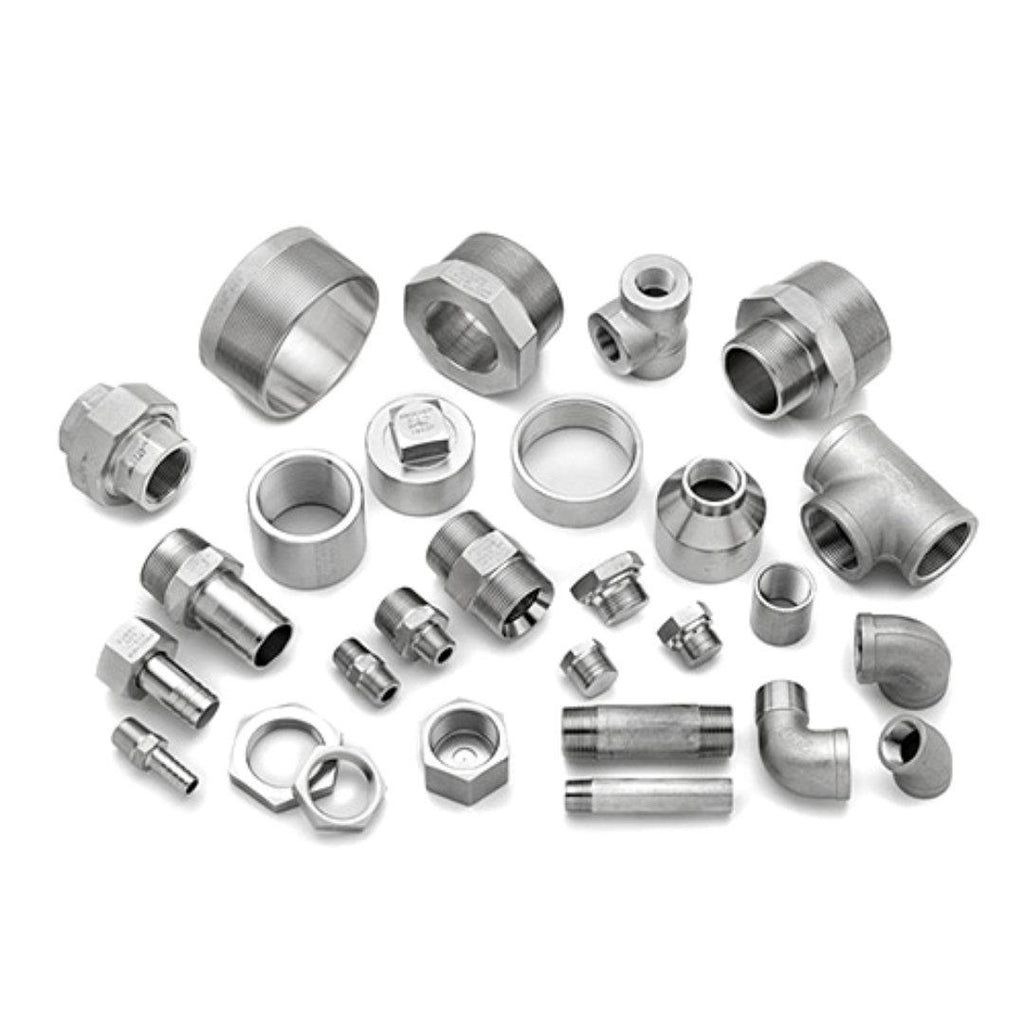
In the world of metal manufacturing, two giants stand tall: Forging and Casting. While both processes have been around for centuries, choosing between them can be the difference between a component that lasts for decades and one that fails under pressure.
At Gajanan Brass Global, we often get asked: “Is forging really worth the investment over casting?” The short answer is yes—especially when your application demands strength, safety, and long-term durability. In this deep-dive blog, we’ll explore the technical advantages of forging over casting and why forged brass is the secret behind world-class industrial performance.
The Fundamental Difference: Liquid vs. Solid
Before we dive into the advantages, let’s clarify the process:
Casting involves melting brass into a liquid state and pouring it into a mold. As it cools, it takes the shape of the cavity.
Forging involves taking a solid brass billet, heating it (hot forging) or keeping it at room temperature (cold forging), and using massive compressive force to “work” the metal into shape.
1. Superior Structural Integrity (The Grain Flow Advantage)
The most significant advantage of forging is the refinement of the metal’s grain structure. When brass is cast, the grain structure is “random” and “dendritic” (tree-like). This creates a material that is isotropic—it has the same strength in all directions, but it lacks a “flow” that can resist specific stresses.
The Forging Edge: Forging physically deforms the solid metal, crushing the grains and forcing them to align with the contour of the part. This is known as directional grain flow.
Impact: A forged brass valve or fitting has grain lines that follow its shape, making it significantly more resistant to impact and fatigue than a cast part of the same dimensions.
2. Elimination of Porosity and Voids
Casting is inherently risky because you are dealing with molten metal. As liquid brass cools, air bubbles can get trapped (gas porosity), or the metal may shrink unevenly (shrinkage cavities). These microscopic “holes” are hidden killers; they act as stress concentration points where cracks can start.
The Forging Edge:
The intense pressure used in forging (often hundreds of tons) literally squeezes the metal together, closing any internal voids or gas pockets.
The Result: Forged components are virtually 100% dense. For industries like oil and gas or high-pressure plumbing, this density ensures a leak-proof performance that casting simply cannot guarantee.
3. Higher Strength-to-Weight Ratio
Because forging creates a denser, more refined structure, forged parts are mechanically stronger than cast parts. In fact, studies show that forged components can be up to 37% stronger in terms of tensile strength and yield strength.
The Forging Edge:
Because the material is stronger, engineers can often design parts with thinner walls and less weight without sacrificing safety.
Benefit: Lighter components reduce shipping costs and make final products (like automotive or aerospace assemblies) more fuel-efficient.
4. Exceptional Machinability and Surface Finish
Castings often have a “sandy” or rough surface finish that requires significant grinding or secondary machining to look professional. Furthermore, if a machinist hits a hidden air pocket (porosity) inside a cast part, the tool can break, or the part must be scrapped.
The Forging Edge:
Forged brass parts come out of the die with a clean, lustrous finish. Because there is no internal porosity, the material is incredibly consistent to machine.
Benefit: This leads to longer tool life and a much lower “scrap rate” during production. For a business, this translates to faster turnaround times and lower overall costs per unit.
5. Better Resistance to Fatigue and Impact
In applications where a part is subjected to repeated stress—like a gear in a machine or a connector in a vehicle’s suspension—fatigue resistance is everything. Castings, with their random grain structure and potential defects, are prone to “brittle failure.”
The Forging Edge:
Forged brass is more “ductile” and “tough.” It can absorb sudden shocks and cyclic loads far better than cast brass.
Application: This is why critical safety components in the Automotive, Aerospace, and Defense sectors are almost exclusively forged.
Forging vs. Casting: A Quick Comparison Table
| Feature | Forging (Gajanan Brass Choice) | Casting |
| Internal Structure | Dense, aligned grain flow | Porous, random grain structure |
| Strength | Very High (up to 37% stronger) | Moderate |
| Reliability | No hidden voids; leak-proof | Potential for hidden defects/leaks |
| Surface Finish | Smooth, high-quality finish | Rough, usually requires grinding |
| Machinability | Excellent and consistent | Variable (risk of hitting voids) |
| Best For | High-pressure, high-stress parts | Complex, hollow, or massive shapes |
When Should You Still Use Casting?
While we champion forging for its strength, casting does have its place:
Complex Internal Cavities: If a part needs a complex “hollow” center that cannot be machined, casting (specifically investment casting) is often the only way.
Massive Scale: Parts weighing several tons are often easier to cast than to forge.
Low Volume: For very small, non-critical batches, casting molds can sometimes be cheaper than forging dies.
Why Choose Gajanan Brass Global for Forged Components?
At Gajanan Brass Global, we don’t just manufacture parts; we engineer reliability. By choosing our forged brass solutions, you are investing in:
Certified Raw Materials: We use high-grade brass alloys optimized for forging.
Precision Dies: Our in-house tool room ensures that every forged part meets strict dimensional tolerances.
International Standards: Our parts are exported globally, meeting the rigorous quality demands of the US and European markets.
Contact us for any requirement of brass components.
Our team will be happy to assist you.
Mobile: +91-99242 32871